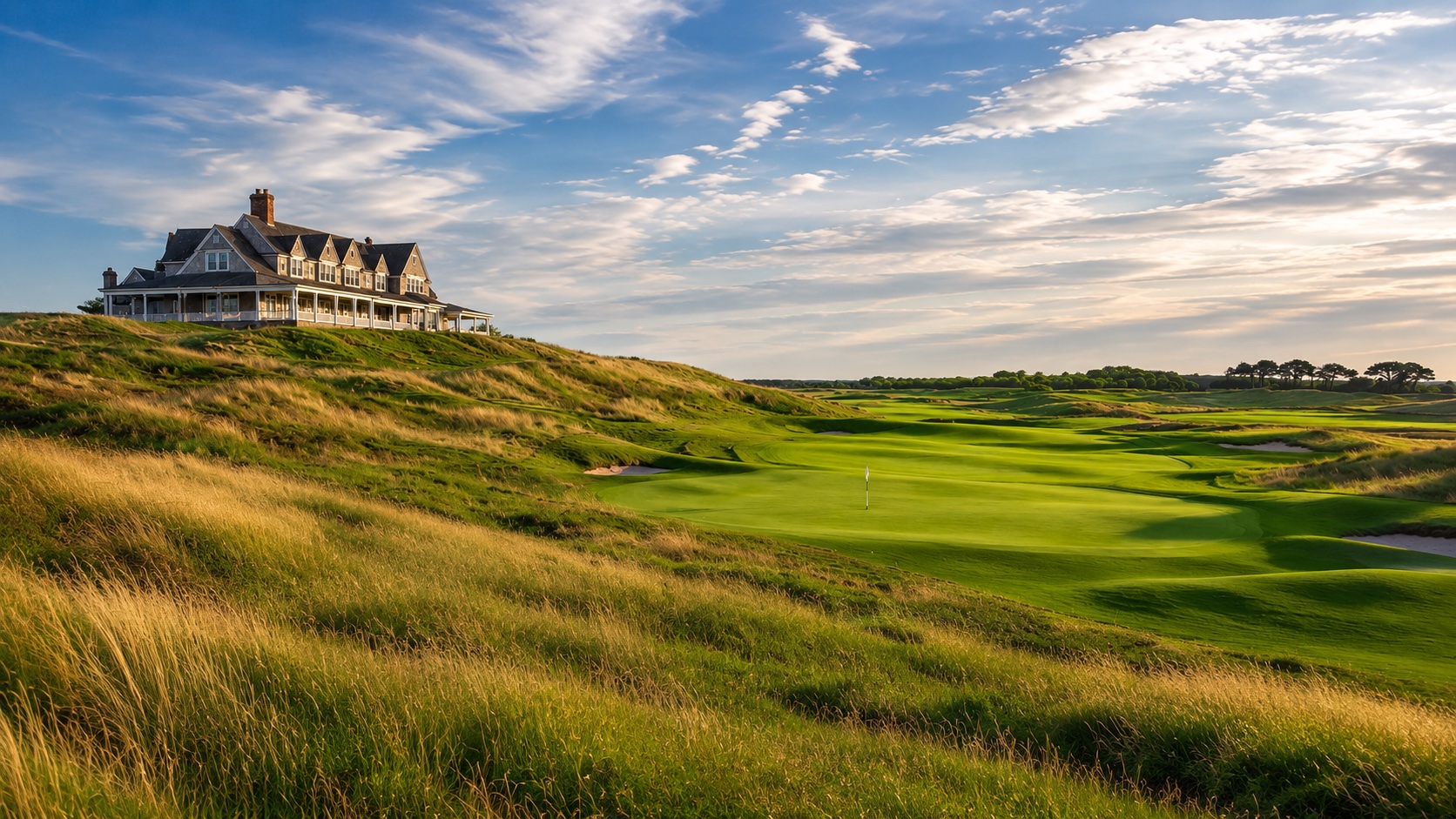
There is a category of private club in America that does not advertise, does not respond to inquiries, and does not operate a wait list in any conventional sense. You are either considered for membership by the existing membership, or you are not. Money is a baseline requirement, not a distinguishing one. The twelve clubs below occupy that category.
Augusta National Golf Club — Augusta, Georgia
The most famous private club in the world has approximately 300 members, all male, all invited by the club’s chairman. The initiation fee is estimated between $40,000 and $100,000 — a figure almost irrelevant given who joins. Members include CEOs of Fortune 100 companies, former secretaries of state, and billionaires who could build their own courses. The Masters is the club’s annual public-facing moment; the other 51 weeks are entirely private. Green jackets are stored at the club and worn only on property. Augusta does not have a public-facing contact.
Bohemian Club — San Francisco, California
Founded in 1872, the Bohemian Club is the oldest and arguably most secretive elite men’s club in the country. Its urban clubhouse on Taylor Street in San Francisco is members-only; its summer encampment at Bohemian Grove in Monte Rio — 2,700 acres of old-growth redwoods — is where its real mythology lives. The two-week July encampment draws ex-presidents, defense contractors, media executives, and Silicon Valley founders for what members describe as a retreat from “the Redwood Empire.” Initiation is by invitation only; the wait list runs 15 to 20 years. Annual dues are modest by elite standards. The real cost is time, as membership requires sustained presence in San Francisco’s old-guard establishment.
Knickerbocker Club — New York, New York
Established in 1871 as a refuge from what old-money New York perceived as the democratic excesses of the Union Club, the Knickerbocker remains the definitive expression of American patrician culture. Membership is hereditary in practice if not in rule — generations of the same families have belonged since founding. The 62nd Street clubhouse is deliberately understated. No website, no printed membership directory, no events open to non-members. Initiation fees and dues are undisclosed. The club is small by design: roughly 550 members.
Somerset Club — Boston, Massachusetts
Boston’s most distinguished social club occupies a pair of Greek Revival townhouses on Beacon Street, across from the Common. Founded in 1851, it is the institutional home of Boston Brahmin culture — a phrase that itself describes a world of inherited connection rather than acquired wealth. Membership is male-only and strictly by sponsorship and election. The wait is measured in years. There is no application process in the modern sense; you are brought forward by members who have known you for some time. The club’s interiors have barely changed in a century. That is not neglect — it is intention.
Metropolitan Club — New York, New York
J.P. Morgan founded the Metropolitan Club in 1891 after a friend was blackballed from the Union Club. He built a Stanford White palazzo on Fifth Avenue at 60th Street and immediately made it the most architecturally imposing club in the city. Today it remains one of the largest and most opulent — the Great Hall alone rivals most European state rooms. Initiation runs approximately $30,000; annual dues around $7,000. Membership requires sponsorship by two members and approval by the admissions committee. The Metropolitan is somewhat more accessible than some on this list, but its address, history, and clientele keep it firmly in the upper tier.
Pacific-Union Club — San Francisco, California
The Pacific-Union occupies the Flood Mansion on Nob Hill — one of the few structures to survive the 1906 earthquake and fire — and has done so since 1911. It is the West Coast’s answer to the Somerset or the Knickerbocker: a club defined by family lineage in San Francisco and Northern California’s old money community. Membership is male-only and by invitation. The Nob Hill address, the brownstone exterior, and the waiting period (which can extend a decade) are all of a piece. There is no membership fee publicly stated.
Brook Club — New York, New York
The Brook, founded in 1903 on East 54th Street, is among the smallest and most selective social clubs in Manhattan with approximately 350 members. Its name references the Alfred Lord Tennyson poem — “I come from haunts of coot and hern” — and the literary sensibility is genuine: the Brook has historically attracted publishing, law, and arts figures alongside Wall Street. Membership is exclusively male, exclusively by sponsorship, and the admissions process is known for its deliberateness. The clubhouse has no signage. Lunch is served; no dinner.
Links Club — New York, New York
The Links, at 36 East 62nd Street, was founded in 1917 for golfers of means who wanted a non-sporting city club to complement their country club memberships. Today it is as much a social club as a golf one, though golf remains central to its identity. The membership roster reads like a cross-section of old-money New York, with particular depth in finance, law, and Republican Party circles. Initiation fee is approximately $20,000 to $30,000; annual dues around $8,000. Wait times vary but are typically several years.
Racquet Club of Philadelphia — Philadelphia, Pennsylvania
Founded in 1889, the Racquet Club at 215 South 16th Street is Philadelphia’s most distinguished men’s athletic and social club. Squash and court tennis have always been central; so has the dining room and library. The membership is Philadelphia Main Line through and through — Haverford, Merion, Devon — and the admissions process reflects that cultural continuity. Initiation and dues are not publicly listed. The club’s waiting list for full membership consistently runs multiple years.
Bath and Tennis Club — Palm Beach, Florida
On the oceanfront in Palm Beach, the Bath and Tennis Club has operated since 1926 as the social anchor of Palm Beach’s winter season. The membership is predominantly old Palm Beach money with substantial representation from New York and New England families who winter there. Initiation fee is estimated at $150,000 to $250,000; the wait list for family memberships has historically run five to ten years. The club does not publicize itself. Its beach, pool, and tennis facilities are simply among the finest private recreational settings in the country.
Everglades Club — Palm Beach, Florida
The Everglades, founded in 1919, sits on Worth Avenue and occupies a compound designed by Addison Mizner — the architect who essentially invented the Palm Beach aesthetic. The club is intensely private, socially conservative, and deeply connected to the oldest families of the Palm Beach establishment. Initiation is rumored to exceed $300,000. Membership decisions are made by long-tenured members who take the culture of the club seriously. The golf course, while not a tournament track, is impeccably maintained. The winters in Palm Beach largely revolve around who is and is not an Everglades member.
Chevy Chase Club — Chevy Chase, Maryland
Just outside Washington, D.C., the Chevy Chase Club was founded in 1885 and has long served as the social and sporting institution of the capital’s establishment — old-line Washington families, senior administration officials, and the diplomatic and legal community that surrounds them. The club maintains a full country club format: golf, tennis, swimming, dining. Initiation fees are in the range of $85,000 to $100,000; annual dues approach $15,000. The wait for membership is significant. Its proximity to Georgetown and Bethesda’s professional class, combined with its historically political membership, makes it unlike any club in the country.
The common thread in all twelve clubs is not wealth — it is tenure. These institutions reward families who have been part of them for generations, and they view new applicants with a patience and deliberateness that reflects their confidence in their own permanence.
Understanding these clubs is useful not because membership is achievable through effort, but because they represent the uppermost stratum of a membership culture that extends, in scaled form, throughout the private club world. The dynamics of sponsorship, election, waiting, and cultural fit that govern Augusta and the Knickerbocker govern every serious private club in the country — just with shorter timelines and less mystique.