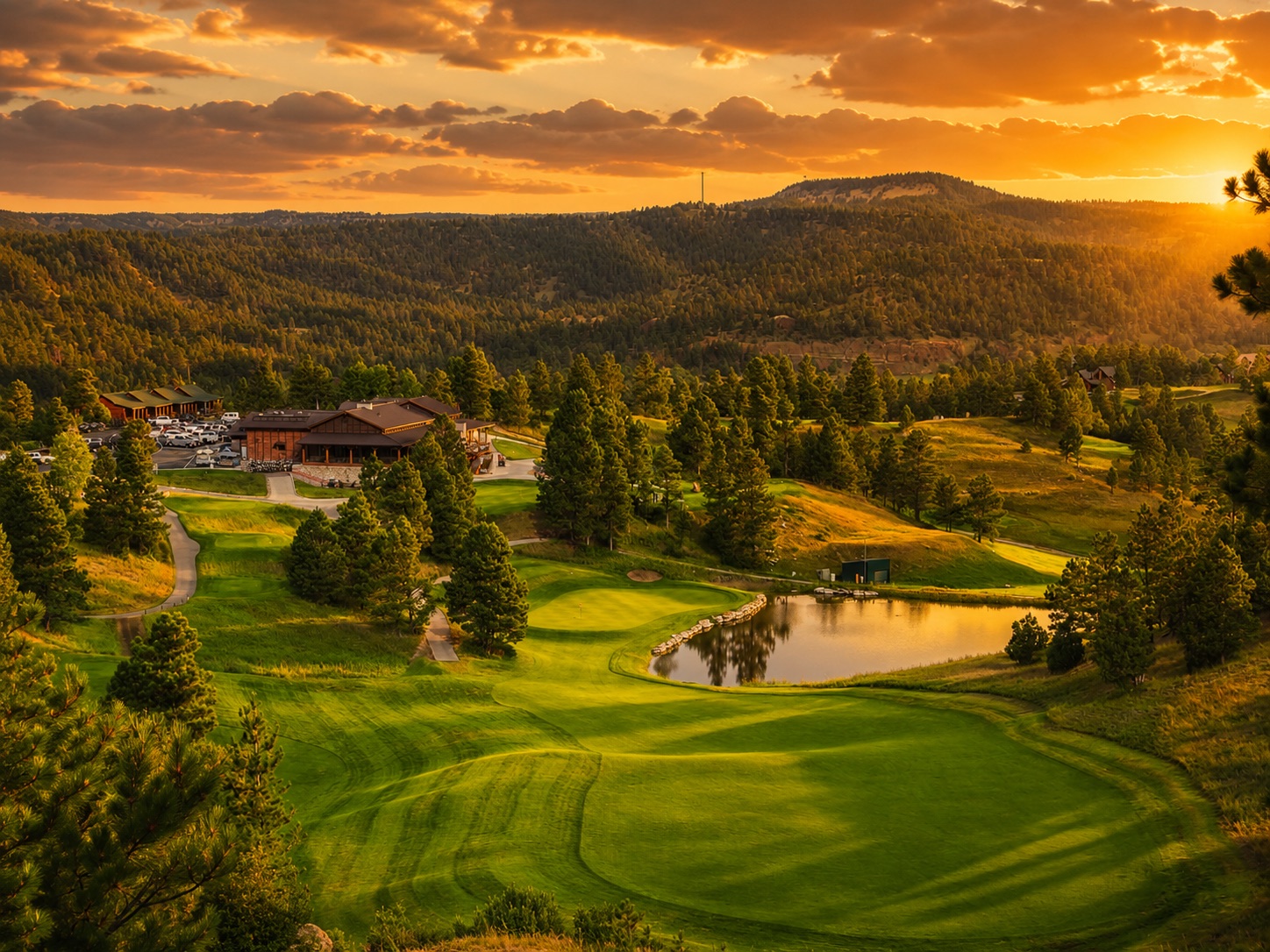
There are private clubs you join because they’re close to home, and there are clubs you join precisely because they aren’t. The Golf Club at Devils Tower, set in the pine-and-rimrock canyon country of northeast Wyoming, belongs firmly to the second category — and its members, spread across some thirty states, wouldn’t have it any other way.
Eight miles down the road, Devils Tower National Monument rises 867 feet off the prairie — the formation Native nations call Bear Lodge, the first national monument in the United States, and the backdrop to every round played here. This is not golf adjacent to scenery. This is golf inside it.
A Course Built for the Landscape
Crafted by Phelps-Atkinson Golf Design under the direction of Kevin Atkinson, ASGCA, the course unfolds across 150 acres of dramatic elevation change — fairways dropping through ponderosa pine, greens set against red-rock outcroppings, and long views that stretch across the Bear Lodge Mountains. Originally built as a public nine in 1996, expanded to eighteen holes in 2005 and turned fully private in 2007, it now plays to 7,111 yards at par 72, the 603-yard par-5 15th its longest test.
The recognition has followed. The National Golf Foundation has named the club one of America’s Top Facilities, Golf Digest tabbed it a “Best New Course,” and Golfweek ranks it among the best private courses in Wyoming — and in its Top 200 Residential Courses nationally.
Tarmac to Tee in Ten Minutes
Every destination club has to answer the same question: how do members actually get there? Devils Tower’s answer is unlike any other club in the country. Hulett Municipal Airport sits within the club community itself — members and guests land, load their clubs onto a cart, and are standing on the first tee in roughly ten minutes. Shuttle service to the clubhouse is available on request.
It reframes the geography entirely. What looks remote on a map becomes one of the most convenient golf trips in America by air — closer, door to door, than many members’ “local” clubs on a Friday afternoon.

Built for the Traveling Golfer
Membership here is structured around how destination golf actually works. Most members treat Devils Tower as a second or third club — two, three, four trips a year, each built around an extended stay rather than a quick eighteen. On-site lodging makes that possible: bunkhouse rooms, fourplex units, and a collection of private cabins keep members and their guests on property from the first tee shot to the last nightcap.
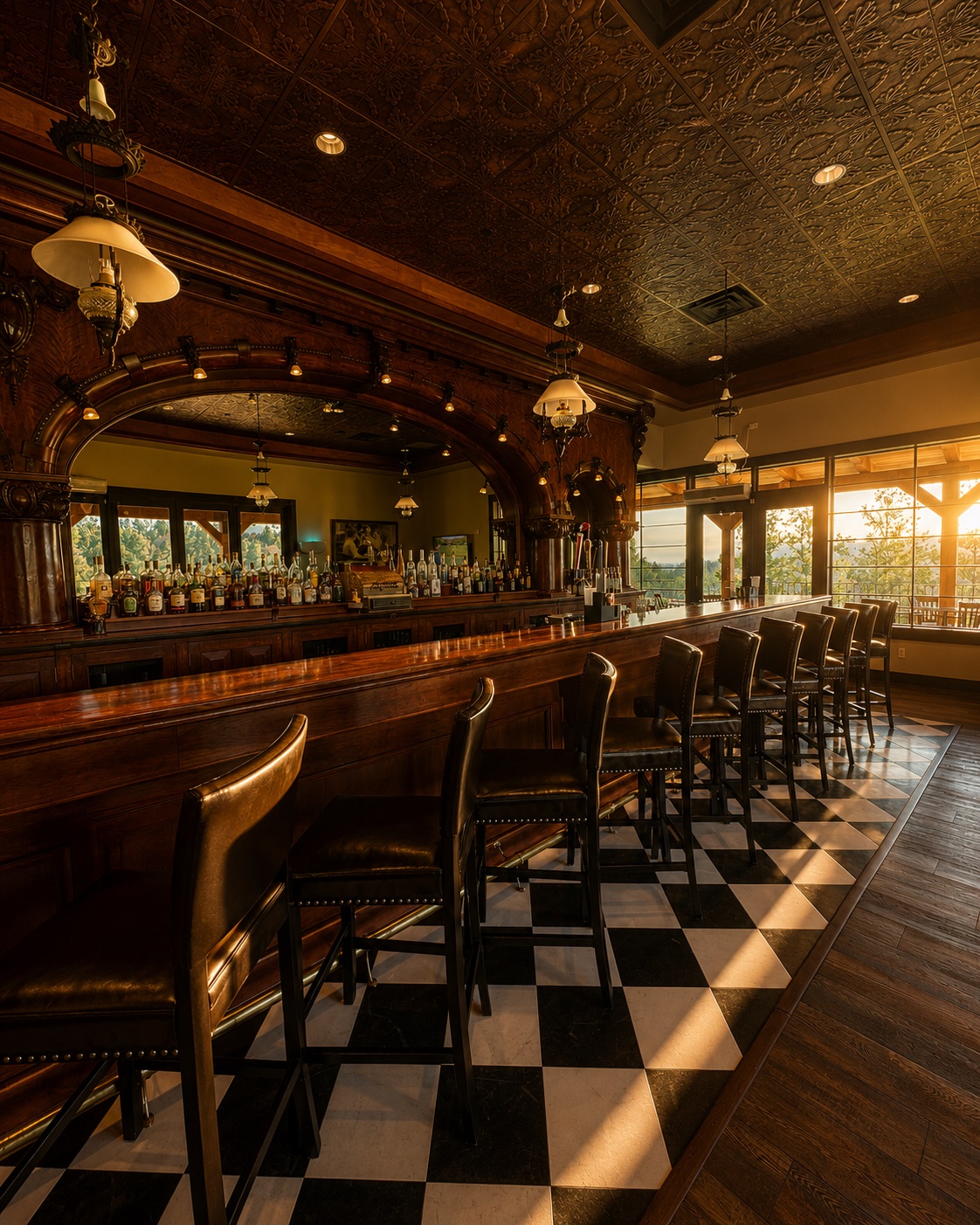
That nightcap has a home, too. The 77 Steakhouse & Saloon anchors the clubhouse, its centerpiece a beautifully restored 1897 cherrywood bar — a genuine piece of Wyoming history that predates the monument designation itself. Beyond the course, members have access to a regulation-size skeet range, and the surrounding Crook County backcountry offers fly fishing, hiking, and trail riding between rounds.
From Visit to a Home on the Range
For members who find two or three trips a year aren’t enough, the club offers a path to staying for good. Homesites along the front nine are available within the club’s log-home community — build a year-round residence or a private getaway under the big western sky, steps from the first tee and the airstrip alike.
It’s the full destination-club arc: guest, member, homeowner. Few clubs anywhere offer all three within 150 acres — and none with an 867-foot monument standing watch over the back nine.
The Golf Club at Devils Tower is part of the LXV network. Explore the club and inquire about membership →