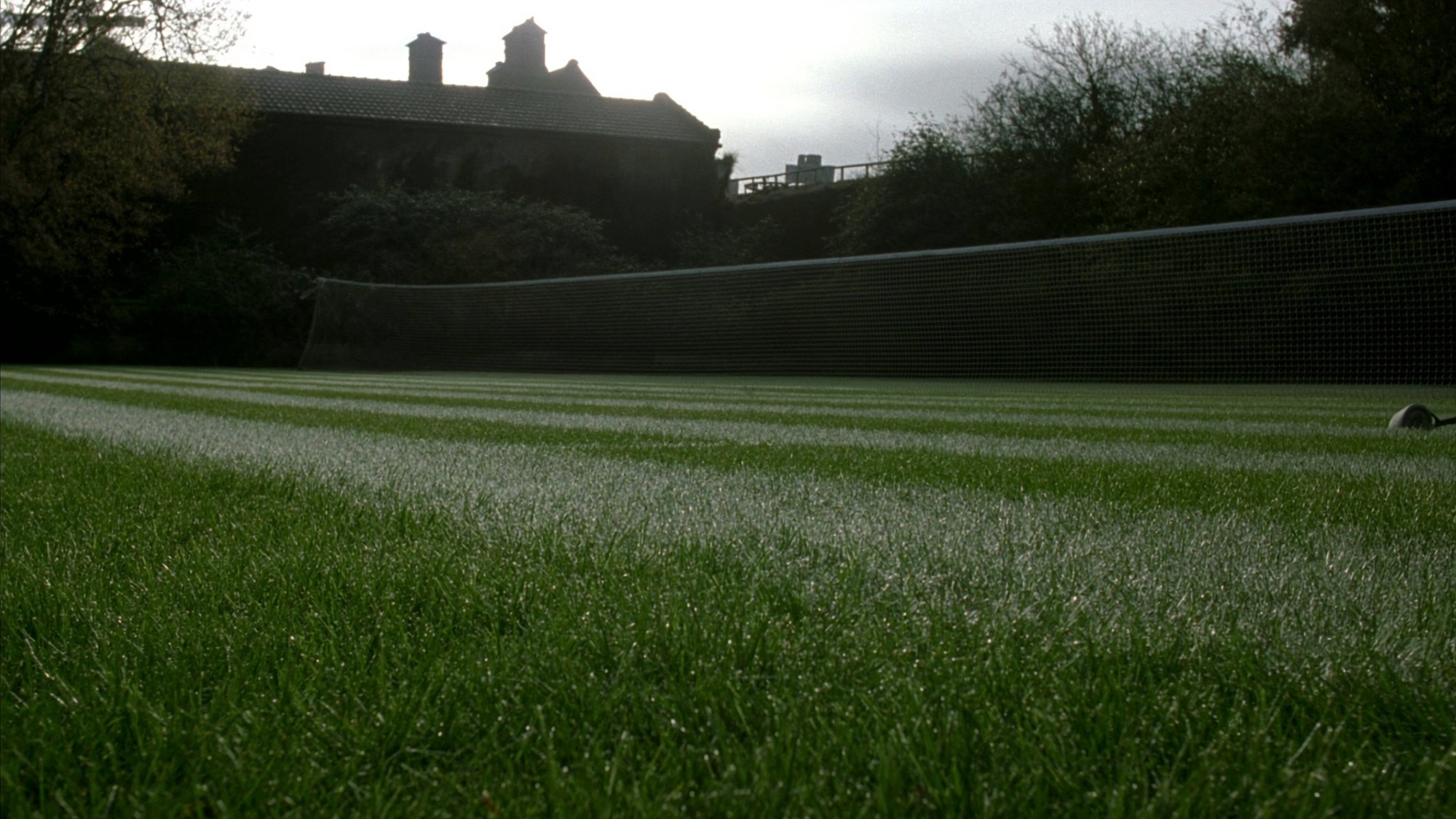
The Court That Cannot Be Rushed
A hard court, poured and painted, will sit through a decade of Tuesday matches with little more than a hose-down and, eventually, a resurfacing. A grass court, built to the standard a serious player would accept, needs something closer to a small agricultural operation: a mower set to single-digit millimetres, a roller, a sprinkler system run on a schedule, and a person whose job is to watch the turf the way a greenkeeper watches a putting green. It can also only be played on for part of the year.
That gap — between the surface that asks nothing of you and the surface that asks for a staff position — is the real subject of the current buildout at private clubs and high-end residential properties. Pickleball gets the headlines and the noise complaints. Padel is quietly rewriting the economics. But the number that actually explains what a club is signing up for is the maintenance line, not the construction invoice, and it varies tenfold depending on which surface gets chosen.
What Each Surface Actually Costs to Build
Ranges below are contractor-quoted totals for a single regulation court in 2026, not fixed prices — they move with region, drainage, fencing, and lighting. Source: Sports Venue Calculator’s 2026 construction cost guide.
| Surface | Total installed cost (single court, 2026) | Notes |
|---|---|---|
| Artificial turf | $25,000 – $80,000 | Lowest entry cost; used mainly for padel and multi-sport lines, not tournament tennis |
| Clay (including Har-Tru) | $35,000 – $95,000 | Range reflects clay type and subsurface vs. sprinkler irrigation build |
| Asphalt (hard court base) | $40,000 – $105,000 | Post-tensioned concrete bases, now common at the premium end, push toward the top |
| Padel (fully enclosed) | $43,000 – $96,100 | Steel-and-glass enclosure typically runs 40–60% of total cost |
| Natural grass | $50,000 – $110,000 | Residential-grade turf install, not a championship-spec court — see note below |
The grass figure carries a caveat the guide itself doesn’t: a tournament-standard court is a different order of project. The All England Lawn Tennis and Croquet Club reseeds its 18 championship grass courts every September using roughly nine tons of grass seed a year, on a soil and drainage profile engineered specifically for the purpose — infrastructure no generic residential quote prices in. Genuine Wimbledon-grade turf should be expected to run well past this table’s ceiling.
The Maintenance Line Is the Real Story
Construction is a single number. Maintenance is recurring, and it’s where the four surfaces stop looking like variations on a theme and start looking like different businesses.
Hard courts are, by a wide margin, the cheapest surface to own. Beyond periodic crack repair and a resurfacing coat every four to eight years, a hard court asks for routine cleaning and little else. General court-maintenance-contract pricing — not surface-specific, but indicative — runs $1,500 to $5,000 a year, with hard courts at the low end and resurfacing running $4,000 to $8,000 per court when due, per Sports Venue Calculator’s maintenance guide.
Clay and Har-Tru are a meaningfully different commitment. A Har-Tru court loses two to three tons of surface material a year under sprinkler irrigation — four to five tons in Florida — replenished through monthly or annual top-dressing, per Har-Tru’s own maintenance documentation and the guide published by court-supply distributor 10-S. The surface needs daily brushing and watering in season, regular rolling, and a laser-graded resurfacing roughly every four to five years. One maintenance-cost aggregator puts ongoing material costs alone at “a few hundred to a couple of thousand dollars annually” — a figure that appears to exclude the labor of actually rolling and watering it, a real and separate cost for a club running the surface daily.
Natural grass, maintained to a genuinely playable standard, is in another category. It needs mowing every two to three days to a height of 6 to 10 millimetres, weekly rolling with a ballast roller, careful irrigation, and regular fertilization and aeration — a profile one grass-court specialist prices at $5,000 to $15,000 a year per court. The surface also isn’t available year-round: at the All England Club, the grass courts are playable from May to September, roughly five months a year, before the turf is renovated and reseeded. A club or estate installing a grass court is not buying a court. It is buying a five-month asset with a permanent staffing requirement attached.
Padel Is the Growth Story, and the Economics Explain Why
Padel is still small in America by absolute numbers — an estimated 1.07 million Americans played in 2025, with just over 1,000 courts open across 31 states as of April 2026, per the Sports & Fitness Industry Association’s first-ever padel tracking. But the U.S. Padel Association projects 10,000 courts and more than 10 million players by 2030, and club-level investment already reflects that bet: SFIA reported club membership in padel programs up 51.5% year over year in 2025.
The appeal to a facilities committee is structural, not just trendy. A padel court’s enclosed playing area is roughly a third the footprint of a tennis court — three padel courts fit inside the space one tennis court occupies, per Wikipedia’s padel entry — so a club can add meaningfully more capacity, and more social throughput, on the same land. The format is doubles-only, matches run shorter than a tennis set, and the enclosed glass-and-mesh walls keep the ball in play longer per rally. Real examples back the logic: Quail Creek Country Club broke ground on a three-court padel complex in April 2026 alongside its existing nine Har-Tru courts and six pickleball courts, per Club + Resort Business — padel added onto an already-built racquets program, not a replacement for it.
Pickleball’s Growth Is Not in Question. Its Placement Is.
Pickleball’s participation numbers are the largest and least ambiguous in this piece: 24.3 million Americans played in 2025, per SFIA’s 2026 Pickleball Single Sport Report, up from 4.2 million in 2020 — a fivefold increase in five years, 171.8% over just the past three. It has been the country’s fastest-growing sport for five consecutive years, and core players — those playing eight or more times annually — reached 7.48 million in 2025, up 20.4% year over year.
The friction is not about whether to add pickleball. It is about where. Because pickleball courts are a quarter the size of a tennis court, the fastest way for a club to add capacity is to stripe or convert existing tennis courts — precisely what has produced the sport’s most consistent controversy. In San Francisco, a homeowners association sued the Bay Club in late 2024 over six pickleball courts converted from two tennis courts roughly two years earlier, arguing that pickleball’s percussive noise — reported in the suit as frequently exceeding 70 decibels against an ambient baseline of about 53 decibels — had made an adjacent 155-unit residential building unlivable, despite the club’s limited hours and sound-dampening curtains. Club + Resort Business, which reported the case, noted similar disputes in Missouri, Connecticut, and Michigan. The conflict is rarely about whether members want the sport — it is whether the members who don’t play it were consulted before their tennis courts got louder.
Why Clubs Are Actually Doing This
The participation numbers make the case plainly. Racquet sports as a category reached 20.6% participation among Americans in 2025, up from 13% in 2019, per SFIA’s 2026 Topline Participation Report. Tennis alone grew 6.2% year over year to 27.3 million players. Layered onto pickleball’s fivefold five-year growth and padel’s early but fast-compounding numbers, the category is the most reliable growth story in private club recreation, golf included.
Clubs are responding with real capital, not pilot programs. Boca West Country Club is completing a $20 million racquets complex in May 2026 with 25 pickleball courts and a dedicated stadium court, tied directly, per its leadership, to member demand for the fastest-growing sport in the country. Quail Creek’s April 2026 padel groundbreaking sits alongside its existing nine-court Har-Tru program and six pickleball courts, not in place of them — the pattern across the trade coverage is additive. Clubs aren’t swapping golf for racquets. They’re stacking racquet capacity on top of what they already have.
The logic is not hard to follow, even without a hard figure to quantify visit frequency: a round of golf is a half-day commitment; a set of tennis, a padel match, or a pickleball session is an hour, easily repeated on a Tuesday evening. More frequent, shorter, more social visits are more touchpoints with the club, and touchpoints are the raw material retention is built from.
What a Court Does to a Property
The same arithmetic that makes a grass court a staffing decision at a club makes it a heavier one at a private residence, where there’s no groundskeeping department to absorb the labor. A homeowner installing a hard or clay court buys a fixed asset with a predictable, low-frequency maintenance bill. A homeowner installing a genuine grass court buys a live one — needing the same mowing, rolling, and irrigation discipline a club assigns to staff, funded at residential scale by a standing contractor relationship or the owner’s own time. The court that photographs best is the one that costs the most to keep photographing well.
The Amenity Is a Filter
None of this is really about the sport. A club does not spend $20 million on twenty-five pickleball courts because members wanted a specific net height. It spends the money because the amenity determines who applies, who stays, and who brings a proposal card to whom. A grass court that plays for five months a year and needs its own groundskeeper is not a recreational feature — it is a statement about what kind of member the club expects to have, and what kind of member it expects to lose if it doesn’t build one. The arms race was never about tennis, padel, or pickleball. It is about which club gets to decide, before anyone applies, who belongs on the other side of the net.