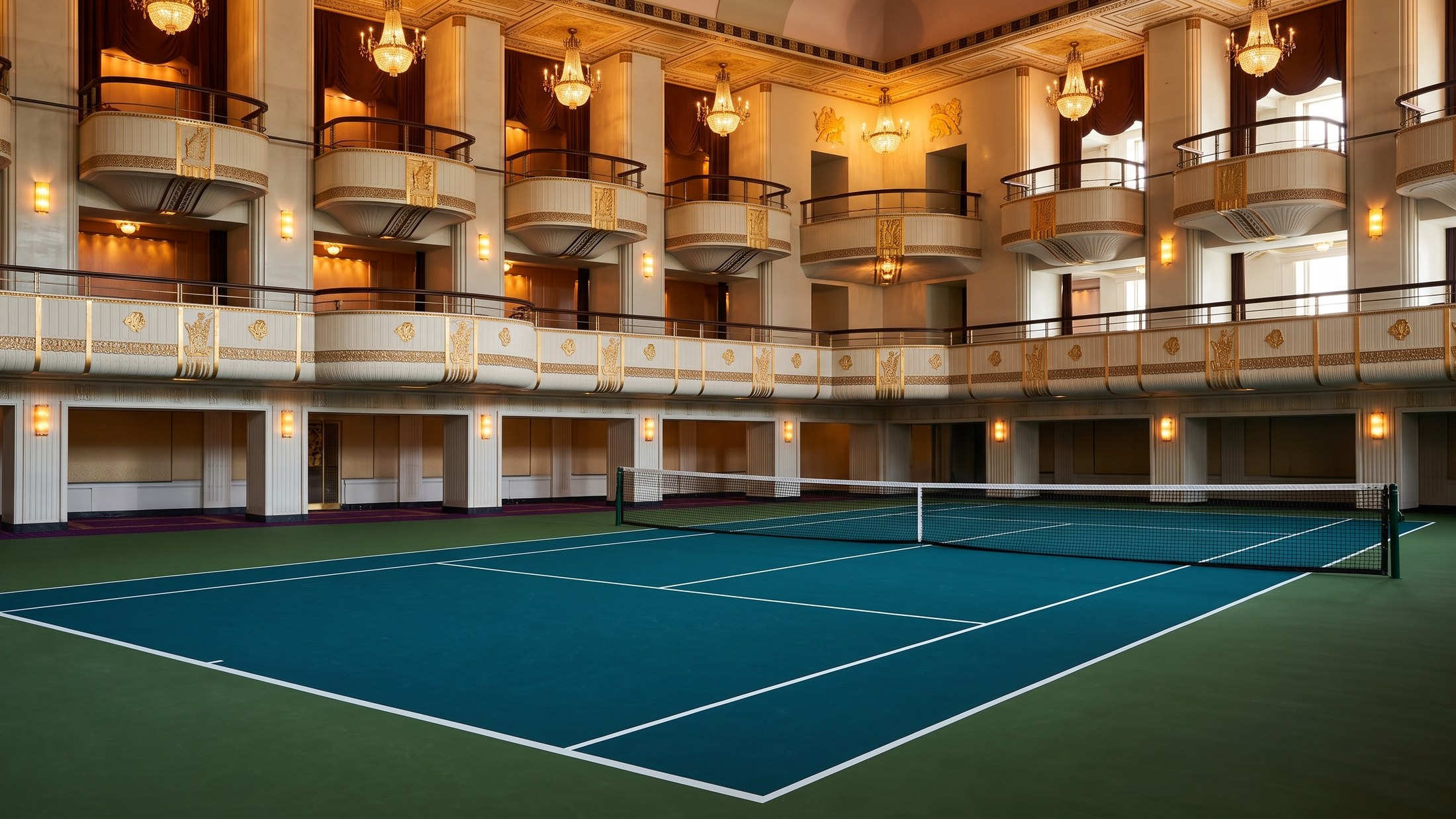
The Grand Ballroom of the Waldorf Astoria has held every sitting American president since Herbert Hoover, the early Met Galas, and more black-tie benefits than anyone has bothered to count. On August 27, it will hold a tennis match.
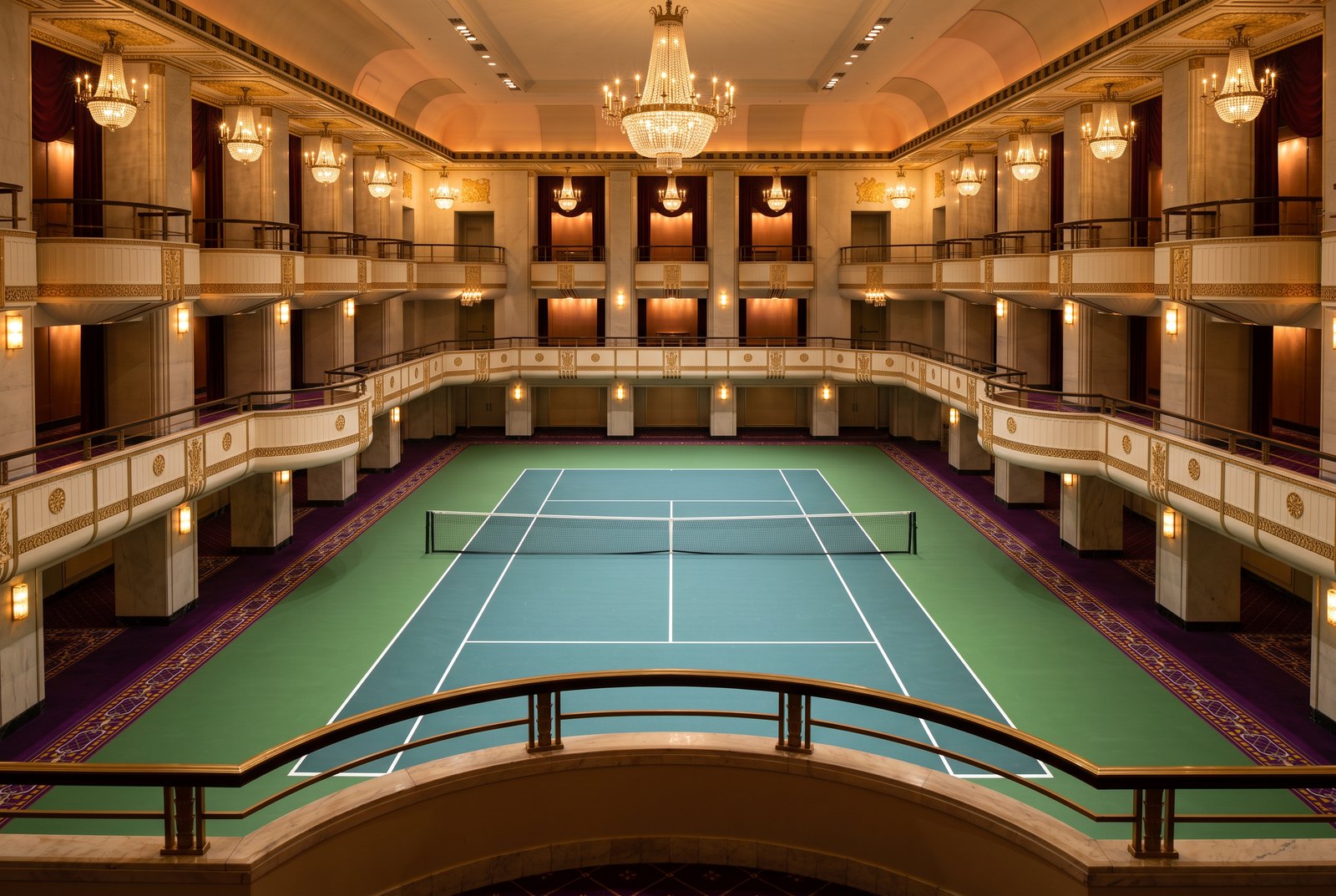
For one evening, a full-size hard court will be laid across the three-storey ballroom floor and four ATP and WTA professionals — Ben Shelton, Tommy Paul, Leylah Fernandez and Maria Sakkari — will contest a series of exhibition matches beneath the chandeliers. It is a genuinely strange and rather brilliant piece of theatre. It is also the opening move in something considerably larger than one night.
One Night, Four Players, One Very Famous Room
The Ballroom Tennis Invitational runs from 6 p.m. to 10 p.m. on Thursday, August 27, at Waldorf Astoria New York. The format is deliberately unfussy: a series of 45-minute singles showcase matches, played on a court built into a room that was never designed to hold one.
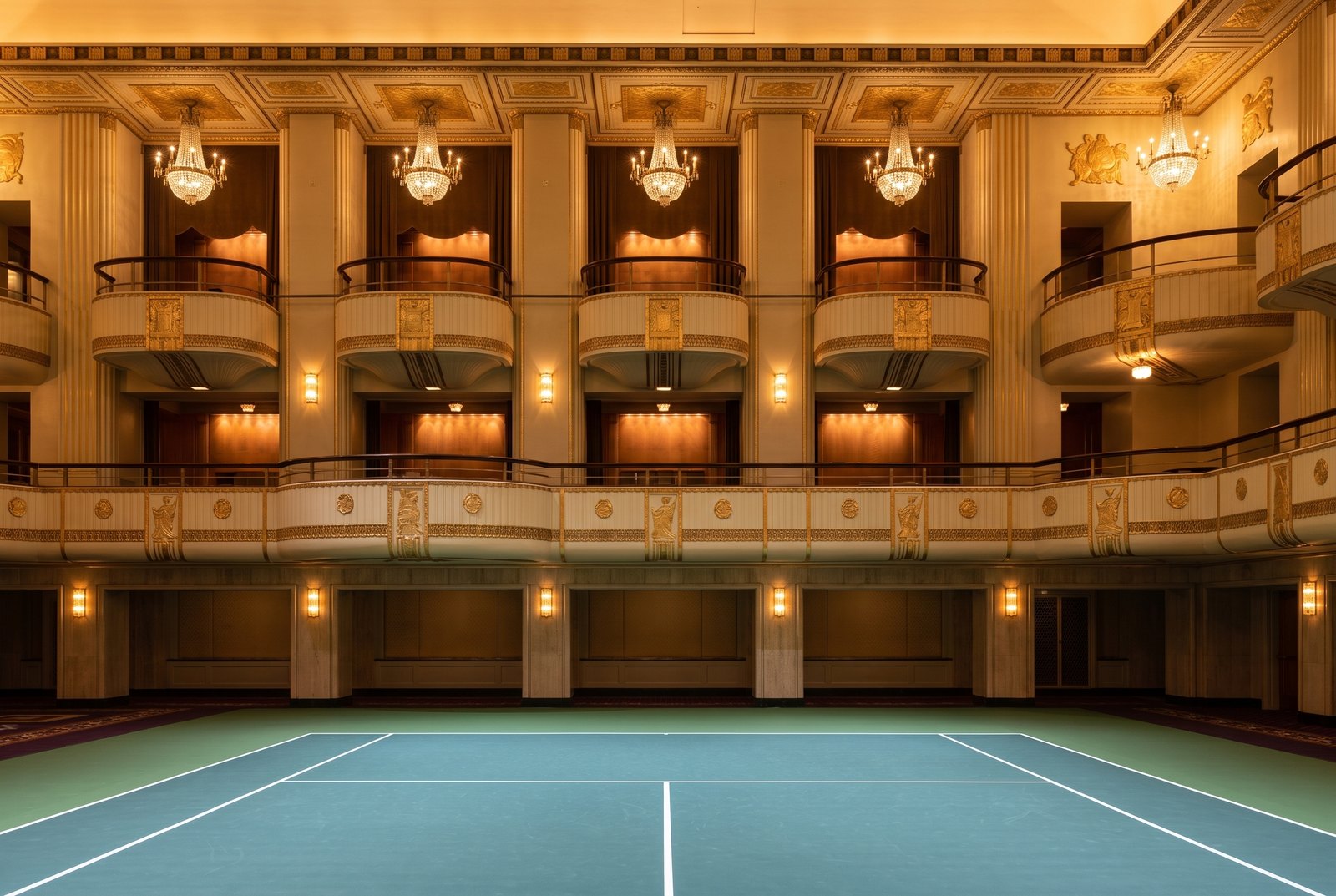
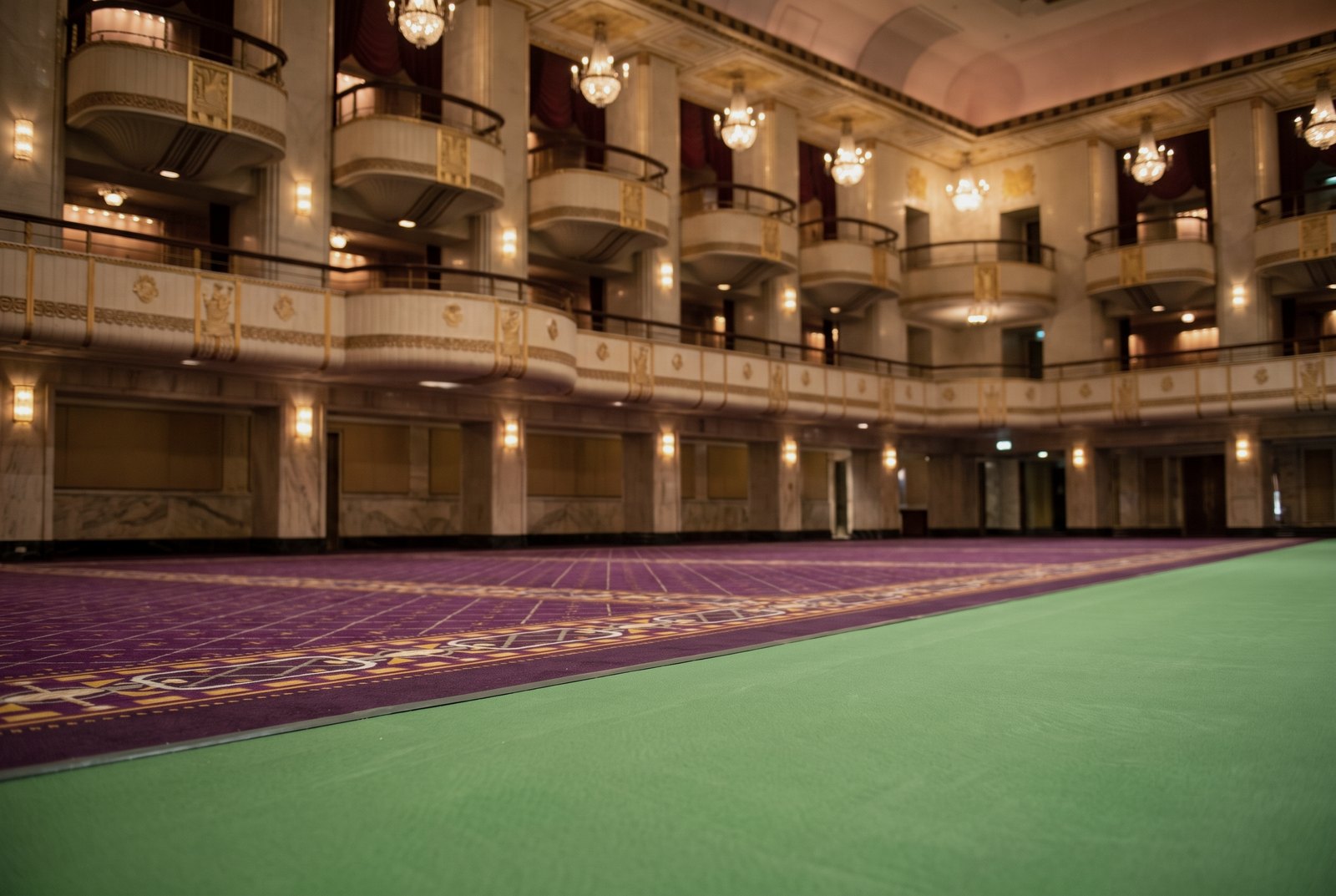
That it is possible at all is a consequence of the hotel’s recent past. The Waldorf closed in 2017 and reopened in stages through 2025 after an eight-year, roughly two-billion-dollar restoration — one of the most significant hotel projects of the century so far. The Grand Ballroom, a landmarked three-storey room with a capacity of around 1,500, was returned to its Art Deco detail and quietly fitted with contemporary sound, lighting, rigging and staging. The restoration preserved the room’s memory and gave it modern lungs. A tennis court is the first real test of what the second half of that sentence makes possible.
What a Ticket Actually Buys
General Access begins at $1,500 and covers the live matches, a culinary reception, the evening’s beverage programme, offerings from the hotel’s Guerlain Wellness spa, and player meet-and-greet access. Above that sit three ascending tiers:
The Champions’ Grand Ballroom Tennis Clinic — a private on-court session with a touring professional on August 28, strictly limited. This is the most telling detail on the whole menu: the court stays down an extra day so that guests can play on it. The spectacle is the hook; the participation is the product.
The Perfect Match — an overnight stay with two event tickets, breakfast and a welcome amenity. Stay, Spectate & Play — a two-night suite package with tickets, a private tennis clinic, a spa treatment and commemorative pieces.
Tickets and packages are sold directly through the hotel. Hilton Honors American Express cardholders have a separate allocation through the Hilton Honors Experiences portal — a reminder that the most valuable seats at events like this are increasingly routed through a card programme rather than a box office.
Five percent of net sales proceeds go to Big Brothers Big Sisters of America, matched by the Hilton Global Foundation. It is a modest percentage on a high-priced ticket, but it does the quiet work that this kind of evening requires: it gives the guest list a reason to describe the night as something other than a party.
The Real Announcement Is Not the Match
The invitational is the launch vehicle for Waldorf Astoria Racquet Club, a new global platform from Hilton’s luxury division built entirely around racquet culture — tennis, padel, and the social architecture around both.
It is not a New York programme. The club spans Waldorf Astoria Maldives Ithaafushi, with professional tennis and padel courts; Rome Cavalieri and its clay; Waldorf Astoria Dubai Palm Jumeirah and its beachside courts; with a Sydney pop-up already planned. The Grand Ballroom is simply the loudest possible way to announce it.
“The Grand Ballroom has always been one of New York’s great stages,” says Luigi Romaniello, the hotel’s managing director. “For one night, we are doing something it has never seen before.” Jamie Kerr, who leads luxury marketing strategy for Hilton, is blunter about the thesis: “Racquet culture has become one of the most compelling expressions of modern luxury.”
Why Racquet Sport, and Why Now
She is not wrong, and the wider market has been saying so for two years. Rosewood Bermuda now runs a dedicated Racquet Center under a Director of Racquet Sports, with clinics, events and a junior academy across tennis, padel and pickleball. Four Seasons has built padel programming into properties as far apart as Dubai, Singapore, the Maldives and Naviva on Mexico’s Pacific coast. The resort-ranking bodies that have graded tennis resorts for decades have added padel categories to keep up.
The reason is structural rather than fashionable. Golf remains the anchor sport of the private club world, and nothing displaces it — but a round is four and a half hours and a foursome. Padel is an hour and a doubles pairing. Tennis sits between them. For a resort or a club trying to manufacture the thing that actually retains members — repeat, low-friction, social contact — racquet sports are simply better-shaped inventory. Sport as social occasion, which is very nearly the phrase Hilton is using.
The Date Is the Strategy
August 27 is not an arbitrary Thursday. It falls inside US Open Fan Week, which runs August 23–29 at Flushing Meadows alongside qualifying; the main draw opens Sunday, August 30. The players are already in the city and acclimatised but not yet in competition. The hospitality market — the corporate tables, the card programmes, the international guests — has arrived and has three days with nothing to do.
Slotting a $1,500-a-head spectacle into that gap is not scheduling luck. It is the same instinct that puts a marquee dinner the night before a major, and it is worth studying by anyone who programmes around a fixed sporting calendar.
What a Private Club Should Take From This
Strip away the chandeliers and there are three transferable moves here.
The first is reframing a legacy asset. The Grand Ballroom’s problem was never beauty; it was that everyone already knew exactly what it was for. Most clubs sit on the same asset class and the same assumption — a dining room, a lawn, a hall, a room with a portrait in it — and the same reflex to programme it the way it has always been programmed. The Waldorf’s answer was to do the one thing the room had never done.
The second is the ladder. Entry was set at $1,500 and then three tiers were built above it, each one converting a spectator into a participant and then into an overnight guest. Nobody was asked to buy the top of the ladder first.
The third, and the most durable, is that a single night was used to launch something with a name, a logo and a footprint across four continents. The event is the marketing. The club is the business.
If You Go
Tickets and overnight packages are available now through Waldorf Astoria New York. Take the clinic add-on if it is still open — playing the room is a materially different memory from watching it. And if you are already coming to New York for the tournament, the invitational sits neatly three days ahead of the main draw, which is where LXV’s own US Open courtside hospitality picks up.
What the Waldorf has understood is the thing LXV was built on: that access is not a room or a tee time, but permission to be somewhere the world does not normally get to stand. A tennis court in the Grand Ballroom lasts one night. The instinct behind it should outlast the court.