Monterey Car Week runs August 7 through 16 this year, and the public calendar for it is enormous. There is a kickoff in downtown Monterey, a hillclimb at Laguna Seca, an automobilia expo that runs three days on its own, the Rolex Monterey Motorsports Reunion, and on the final Sunday, the 75th Pebble Beach Concours d’Elegance on the 18th fairway. Anyone with an internet connection can build an itinerary from it. That is the point, and also the problem: the published calendar is the least interesting version of the week.
The events that determine who actually matters during Car Week mostly do not appear on any calendar at all. They happen behind marque-only gates, inside private estates rented for the week, on a nature preserve that will not confirm a guest list, and in the back rooms of auction houses whose front-of-house preview is a $60 ticket. None of this is secret in the conspiratorial sense — it is simply unadvertised, which in a media environment built on discoverability amounts to the same thing.
The Programme Everyone Already Has
The public architecture of Car Week is genuinely worth naming, because it is the part LXV members are least likely to need briefing on and most likely to already be attending. The week opens with a free downtown kickoff on August 7, followed by the Pre-Reunion and Corkscrew Hillclimb at WeatherTech Raceway Laguna Seca on the 8th and 9th. The Automobilia Collectors Expo runs August 10 through 12. The Rolex Monterey Motorsports Reunion, a vintage-racing meet with more than 500 entrants historically, runs Wednesday the 12th through Saturday the 15th at Laguna Seca, with standard tickets running $150 to $250 a day. The Pebble Beach Concours itself closes the week on Sunday, August 16 — general admission runs $600, and vehicle owners must apply and have their cars authenticated before they are permitted onto the lawn.
That last detail matters more than it looks. Even the most public event of the week is not, strictly, open — the cars themselves are vetted before they are allowed to be seen. Car Week’s exclusivity does not begin at the invitation-only events. It is present in the structure of the free ones too. It simply escalates from there.
The Marque Houses With No Sign Out Front
Along the corridor between the Pebble Beach Lodge and Carmel Highlands, several manufacturers take over private estates for the week and run them as client houses rather than public activations. Casa Ferrari, on Highway 1 in Carmel Highlands, operates Wednesday through Sunday with displays and events that, by design, never reach the public schedule. Bentley’s “Home of Bentley,” adjacent to the Lodge, offers private commissioning sessions where clients work directly with designers, along with heritage-vehicle displays and test drives for invited guests. Range Rover runs its own house nearby, built around early access to limited releases and global model reveals. A Lamborghini presence has, in recent years, taken the form of a private villa reachable only through an existing client relationship or a connection inside the dealer network.
None of these require a ticket, because none of them sell one. Access runs through ownership history, dealer sponsorship, or an existing relationship with the brand — the same currency that gets a member into a private club, applied to a manufacturer instead. Mercedes-AMG, BMW, Rolls-Royce, and McLaren follow a similar pattern elsewhere around the Peninsula, using rented estates less as showrooms than as rooms in which to have a longer conversation with people who already own the car, in the hope they will own the next one too.
The Preserve Where the Car Needs the Invitation
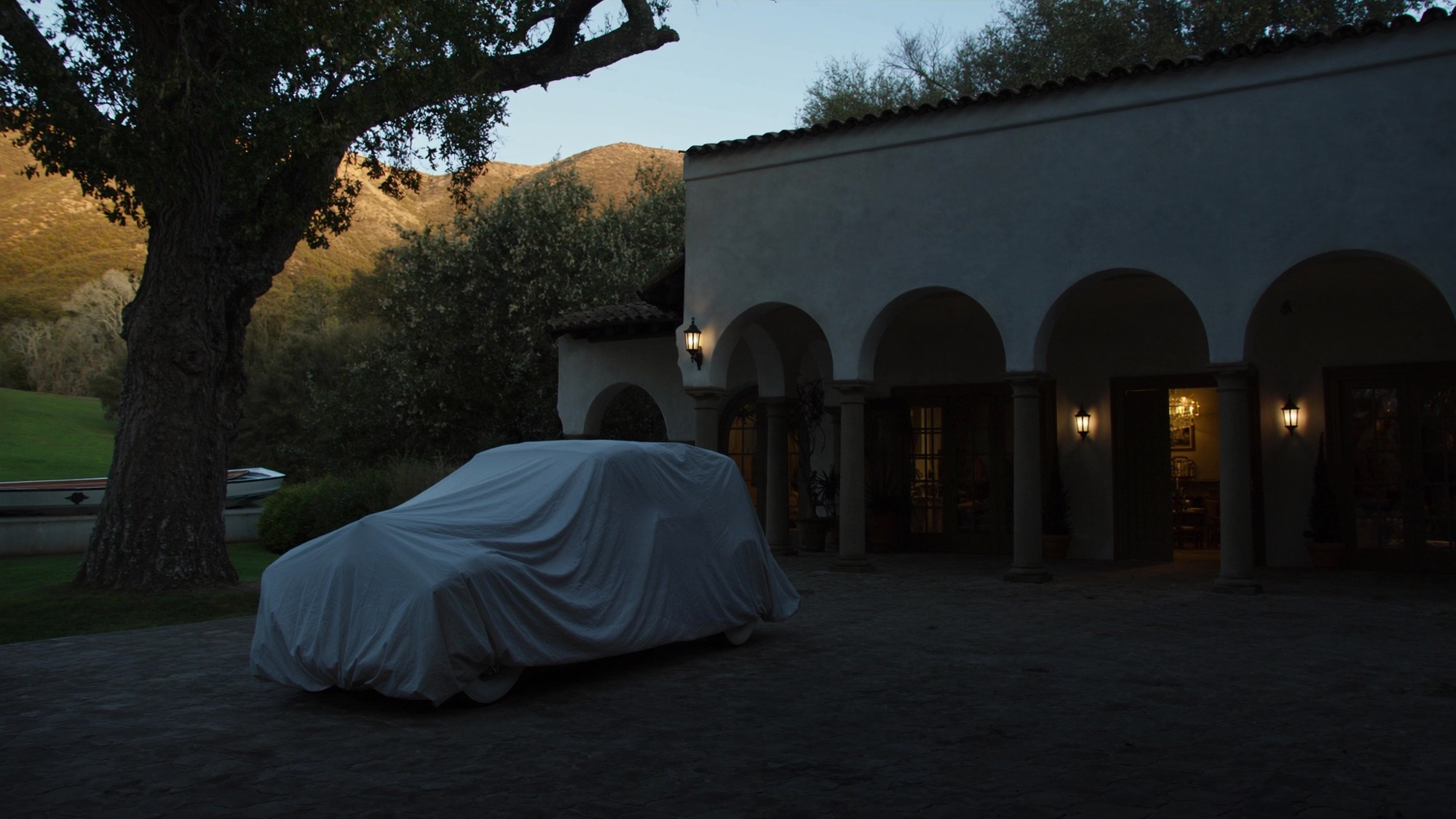
The most structurally interesting event of the week is not a manufacturer house at all. It is Concours & Cocktails, held annually since 2000 at the Santa Lucia Preserve — an 18,000-acre gated conservation community in the Carmel Valley foothills that operates, in effect, as a private nation-state with its own gate and its own guest list. The event is staged at a 1920s Spanish Colonial hacienda built by George Gordon Moore, and it is run today by the Luxury Rally Club, which has built its business on exactly this kind of access rather than a badge and a printed programme.
The guest list is invitation-only, which is unremarkable by Car Week standards. What is unusual is that the cars are vetted separately from the people. Every vehicle proposed for display goes through its own approval before it is allowed onto the grounds — a collector with the right relationships and the wrong car does not get a place on the lawn. Roughly a hundred vehicles typically make the cut, drawn from members’ collections and invited guests, set against an 18-acre lake and hills that Pebble Beach’s fairway views cannot match precisely because no one outside the gate can see them.
It is a small inversion, but a real one. Everywhere else in Car Week’s private layer, the test is on the person: do you own the marque, do you know the dealer, does your name appear on the right list. At Santa Lucia, the car itself must clear its own bar. The Preserve is not asking whether you belong. It is asking whether the object you are bringing does.
The Auction Has Two Rooms
The auction houses — RM Sotheby’s, Gooding & Company, Bonhams — present the most legible version of Car Week’s two-tier structure, because their public and private layers sit inside the same building. RM Sotheby’s 2026 Monterey sale runs its public preview from August 12 through 15 at the Monterey Conference Center; a $60 ticket admits one person to all four days of walking the floor and looking at what is about to change hands. But on the evening of August 12, the front drive is closed at five o’clock for a private function, and only registered bidders and invited guests are let through. The sale itself, when it happens, is open only to registered bidders, qualified media, and consignors — a room the browsing public never enters at all, inside a preview the browsing public paid to attend.
Gooding & Company runs its own Pebble Beach sale on August 14 and 15 alongside a comparable preview structure. In neither case is the paying public excluded from the building. They are excluded from the transaction — which is, when the inventory in question runs into eight figures a lot, the only room that actually matters.
The Membership Behind the Museum
Institutional collecting has built its own gated layer onto the week as well. The Petersen Automotive Museum’s Checkered Flag 200 — its senior membership tier since 1994, available at a lifetime rate of $50,000 — runs a “Petersen Pebble Beach Rally” each August built around private collection tours, fine dining, and auction access arranged specifically for members, alongside entry to the week’s ticketed marquee events. It is, functionally, a club inside a museum that exists to grant access to a club-like week — membership begets membership, at each layer priced higher than the one beneath it.
Private receptions tied to major collectors and to institutions like the Petersen do take place around Car Week, but they are, correctly, undocumented — a benefit dinner in a private residence is not a matter of public record simply because a car happened to be parked outside it. What is documented is the shape: institutions with collecting missions use Car Week as the one week a year their most committed donors are already in the same twenty-mile radius, and they build private programming around that coincidence rather than leaving it to chance.
The Clubhouse Has a Lawn; the Club Does Not
Strip away the individual events and what is left is a familiar shape. There is a showcase — the Concours lawn, the Laguna Seca grandstands, the auction preview floor — that is genuinely open, genuinely photographed, and genuinely the reason 100,000 people justify the trip. And there is a membership layer behind it, reachable by ownership, sponsorship, donation tier, or a rally club’s guest list, that the showcase exists to service rather than the other way around. The Concours is the clubhouse dining room: handsome, public-facing, and not remotely where the club’s actual business gets conducted.
The Santa Lucia Preserve simply makes the logic explicit by applying it twice — once to the guest, once to the car. Everywhere else in Car Week, that second layer of vetting is implied rather than staged. It is still there. A published calendar that runs to hundreds of entries is not evidence that Car Week is transparent. It is evidence of how much room a schedule can have and still not contain the part that decides anything.