The Tournament Has Two Maps
The US Open occupies Flushing Meadows Corona Park for three weeks: Fan Week runs August 23–29, 2026, with qualifying rounds on site, and the main draw runs August 30 through September 13. But the tournament’s real footprint is drawn in Manhattan, not Queens. For the length of the fortnight, a meaningful share of the city’s luxury hotel inventory, private townhouse market, and evening calendar reorganizes itself around a tennis complex eight miles and one bad bridge crossing away.
Most guides to “where to stay for the US Open” answer a transportation question: how do I get to Arthur Ashe Stadium with the least friction. That is the wrong question for anyone who already has tickets and is thinking about the three weeks around them rather than the tennis itself. The right question is which population you are trying to be near — because the tournament sorts people into hotels as cleanly as it seeds a draw.
What Is Actually On the Record About Player Hotels
The USTA does not publish an official player hotel, and no single Manhattan property is contractually or publicly designated as tournament headquarters the way, say, an Olympic host hotel might be. What is publicly reported is thinner and more informal: travel guides covering the tournament note that some players, coaches, and support staff have historically stayed at the Tangram complex in Flushing — the closest full-service hotel to the National Tennis Center, built around the Renaissance New York Flushing hotel — while others, particularly higher-seeded players who value privacy, restaurant access, and distance from the site’s daytime crowds, gravitate toward Manhattan. Properties such as the InterContinental New York Barclay have been described in tournament-season travel coverage as having partnered with the US Open in past years and hosted touring players, though this is trade coverage rather than USTA disclosure.
Beyond that, the public record on who stays where is deliberately unclear, and this piece will not fill the gap with named-player specifics that cannot be sourced to the players or the tournament itself. What can be stated plainly is the shape of the choice: proximity to Flushing, or proximity to everything else the fortnight generates.
The Manhattan Luxury Tier
The properties that fill first are the ones already positioned as tournament-adjacent in the trade. The Lotte New York Palace, on Madison Avenue, has built explicit US Open-season packaging around the tournament dates. The Grand Hyatt New York, sitting directly above Grand Central, has long marketed itself as a partner hotel for exactly the reason that matters most here: Grand Central is the fastest, least fussy route onto the 7 train. The InterContinental New York Barclay carries the longest informal tennis association of the group. None of this is exclusive — these are large hotels selling rooms to anyone who will book them — but the pattern of return bookings, from teams, agencies, and sponsors who have used the same property for multiple US Opens, is itself a form of information. Hotels that work themselves into the tournament’s informal circuit tend to stay there.
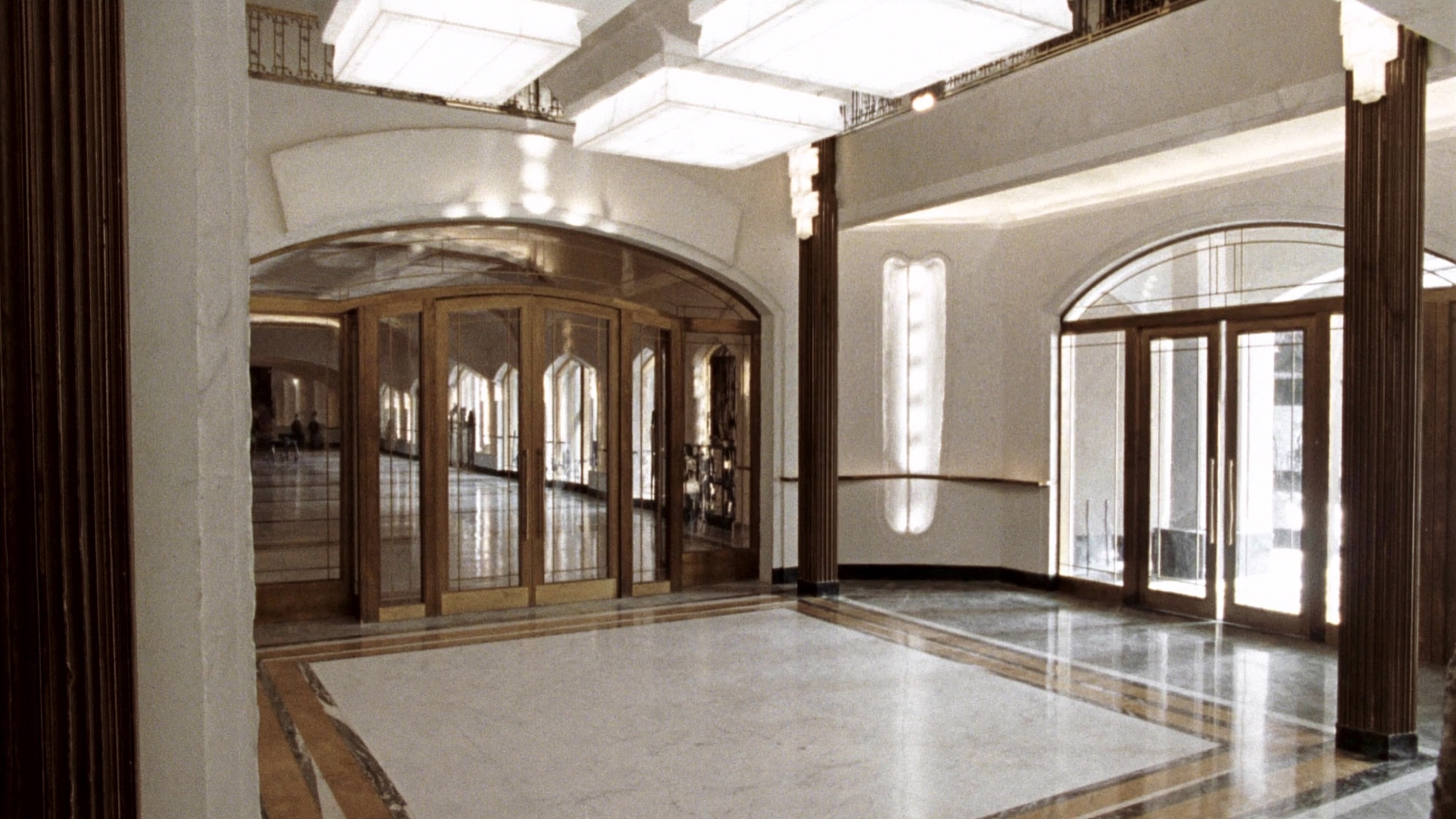
This is also, not incidentally, where the Waldorf Astoria New York now sits. The hotel reopened to guests on September 1, 2025, after an eight-year renovation that began with its closure in March 2017 and that exceeded its original $2 billion budget before completion — Skidmore, Owings & Merrill oversaw the conversion of the 1931 Art Deco landmark from a roughly 1,400-room hotel into a 375-room hotel paired with 375 private residences. The Grand Ballroom itself reopened separately on September 5, 2025. This will be the Waldorf’s first full US Open since that reopening, and on August 27 — inside Fan Week, before the main draw begins — its Grand Ballroom becomes a hard court for one night, launching Waldorf Astoria Racquet Club, a new global platform for the brand’s tennis and padel programming across properties including the Maldives, Rome, Dubai, and Sydney. Tommy Paul, Ben Shelton, Leylah Fernandez, and Maria Sakkari play 45-minute exhibition matches beneath the chandeliers; tickets start at $1,500. LXV covered the event in full here. The date is not incidental — it lands after players have arrived and acclimatized but before the draw starts, when the hospitality crowd is in the city with three open evenings and nothing yet to lose by attending.
The Proximity Play
The advice that actually changes someone’s fortnight, rather than confirming what they already assumed, is this: Long Island City and western Queens are no longer the compromise they were a decade ago, and for a specific kind of US Open attendee — someone going to the grounds most days, not just for one marquee night — they are the better booking. The Mets–Willets Point station, served by the IRT Flushing Line (the 7 train) and the Long Island Rail Road, sits inside Flushing Meadows Corona Park itself, a short walk from the gates. From Long Island City’s Queensboro Plaza or Court Square stations, that ride runs roughly 15 to 20 minutes; from Grand Central in Midtown, the MTA has historically added express 7 train service during the tournament, cutting a Times Square-to-grounds trip to around half an hour. A car covers the same distance more slowly and less predictably, competing with tournament traffic, stadium parking queues, and the Grand Central Parkway.
Long Island City’s hotel stock has also matured. Properties like the Boro Hotel and the Aloft Long Island City-Manhattan View sit within walking distance of the 7 train and offer Manhattan skyline views the equivalent Midtown room, at a comparable or lower rate, will not. The trade-off is real — LIC’s restaurant and nightlife scene is thinner than Manhattan’s, and it puts a river between you and most of the fortnight’s evening events — but for tickets-in-hand attendees prioritizing the tennis over the circuit around it, it is the more rational booking, and one most first-time visitors do not consider.
The Private Rental Tier
Beneath both tiers sits a market the hotel guides do not cover at all: townhouses and full apartments taken for the fortnight by players’ teams, agencies, sponsors, and corporate hospitality groups running their own entertaining outside the tournament’s official suites. This is not unique to tennis — the same pattern shows up around Fashion Week, the UN General Assembly, and any other multi-week New York event that draws a traveling professional class with money and a reason to entertain privately. The mechanism is straightforward: a hotel room, however good, is a fixed unit with no kitchen, no living room, and no ability to host without going through a lobby. A rented townhouse solves all three, and for three weeks of daily use by a team of six to ten people, the economics can compete with a comparable run of hotel suites. Specific figures for this market are not publicly reported with any reliability, and this piece will not invent them — but the mechanism itself is well understood among people who plan around major sporting fortnights, and it is worth knowing it exists even if you are not the one renting the townhouse.
Booking Windows and What Happens to Rates
Rooms at the hotels closest to the grounds — the Tangram-adjacent properties in Flushing — are reported to book out months in advance, with the first-round weeks effectively closed by spring for anyone not holding a corporate allotment. Manhattan’s luxury tier has more inventory and a longer runway, but the properties with the strongest informal tournament association fill early precisely because the same teams and sponsors return to them year over year. Travel guides covering the tournament consistently flag the same pattern without publishing hard figures: hotel rates across both Flushing and Manhattan rise for the fortnight, and the well-located rooms are the first to go, not the first to reprice — by the time a hotel is visibly more expensive, the good rooms are usually already gone. The practical implication is the same one that governs every major event booking: the constraint is availability, not price, and it binds earliest at the properties everyone already knows to ask for.
The Positioning Question
None of this is really about getting to a tennis match. A hotel room nine minutes from Mets–Willets Point solves a transportation problem. A hotel room that happens to be where three tournaments’ worth of agents, sponsors, and touring pros have quietly returned to solves a different one — it puts you inside a fortnight’s worth of dinners, receptions, and elevator conversations that have nothing to do with the scoreboard. Proximity to the venue and proximity to the guest list are not the same optimization, and the US Open is a useful annual reminder that most people, booking on autopilot, solve for the wrong one.
That is, in the end, the same instinct the Waldorf is betting on with a tennis court in its ballroom for one night: that where people gather during a tournament is a more durable asset than the tournament itself. A room booked for August is a transaction. A room booked because of who else books it, year after year, is something closer to standing.