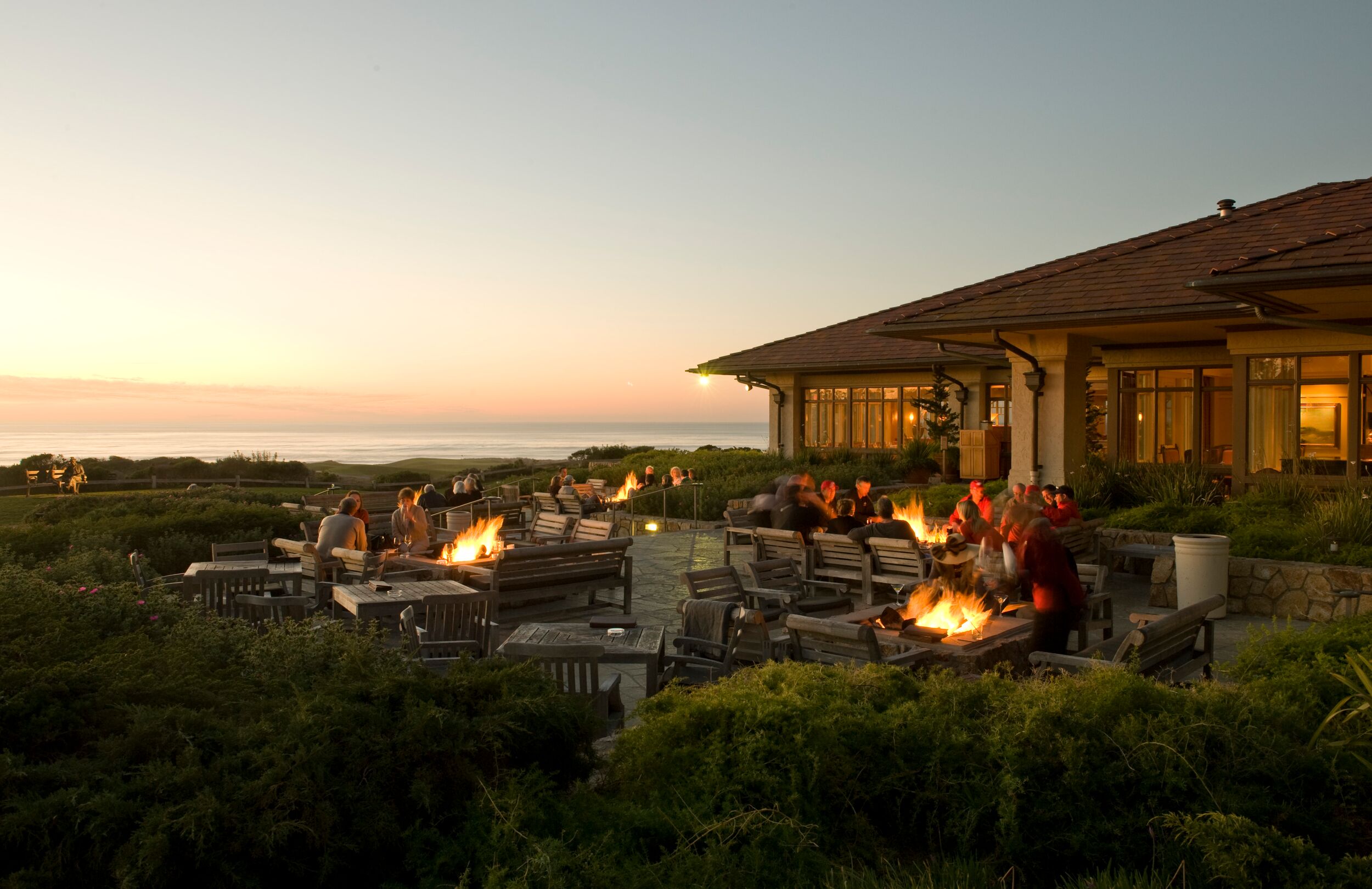
The conversation about golf in Ireland defaults almost immediately to the coast—to exposed headlands, stone walls, dune corridors, and the particular pleasure of reading a green that tilts toward the Atlantic. That conversation is worth having. But it misses an entire category of golf that is, in many respects, the more demanding ask: the inland parkland estate course, where mature woodland, river corridors, and managed water hazards replace wind as the primary shaping force, and where the round ends with a castle in the frame rather than a lighthouse.
Ireland’s castle resorts are not theme parks dressed in battlements. Several of them sit on working estates with documented histories stretching back six to ten centuries. The conversion from noble seat to hotel happened in most cases only in the second half of the twentieth century, and the land—its trees, lakes, and topography—carries that time in ways that a purpose-built resort cannot manufacture. The golf courses built on these estates have had to work within that inheritance: routing around specimen oaks planted before the American republic existed, crossing rivers whose courses predate the English language. The result is a style of golf that rewards patience, local knowledge, and a willingness to think laterally about shot shape.
Three properties define this category at the highest level.
The K Club — Straffan, County Kildare
The K Club sits on the Straffan estate in County Kildare, roughly 45 minutes west of Dublin along the River Liffey. The core fact about the property is this: it is the only 36-hole Arnold Palmer—designed destination in Europe. The Palmer North Course, built in 1991, made history in September 2006 as the venue for the 36th Ryder Cup Matches—the first time the event had been played on Irish soil. Europe defeated the United States by a margin that remains one of the most decisive in the modern format of the competition.
The Palmer North measures 7,337 yards from the championship tees at a par of 72, and it uses the River Liffey not as scenery but as a design instrument. The par-five 7th is the most cited example: a double-dogleg that moves over sand and rough before arriving at a green that occupies its own island, surrounded on two sides by separate arms of the river. The hole has no equivalent in Irish golf. Water is present throughout the round in a way that demands carry decisions on approaches that other parkland courses would leave as pure ball-striking exercises.
The second course—originally the South Course, later sponsored as the Smurfit Course, and now designated the Palmer South—opened in 2003 and plays 7,277 yards with a par of 72. Where the North course is routed through dense mature woodland, the South takes a more open character, deliberately evoking the spatial quality of a links without replicating its topography. It hosted the Smurfit European Open in 2004 (won by Retief Goosen) and again in 2007 (won by Colin Montgomerie). The two courses offer distinct experiences within a single stay, which is the premise of the estate.
The resort hotel is a five-star property alongside the Liffey. Golf access is available to hotel guests and through tee-time bookings; rates and availability vary by season, with peak demand running from May through September. The course books well in advance during summer months, particularly for groups seeking the Ryder Cup provenance of the Palmer North.
Dromoland Castle — County Clare
Dromoland Castle has been the seat of the O’Brien family—direct descendants of Brian Boru, the last High King of Ireland—for over a thousand years. The current castle dates to the 16th century; the estate in County Clare, 13 kilometres from Shannon Airport, encompasses 500 acres of parkland and lake. The transformation to hotel happened in the 1960s. The golf course came later, and the version that exists today is the product of a substantial reinvestment: in 2003, the owners committed more than five million euros to a full redesign of the course, which opened for play in April 2004.
The redesign was led by Ron Kirby in collaboration with J.B. Carr, one of the most celebrated Irish amateur golfers of the twentieth century. Kirby and Carr re-routed multiple holes, introduced new greens and tees, reworked the bunkering scheme, and brought the estate’s natural water features—lakes, streams, and drainage corridors—into deliberate play. The result is a championship parkland layout that measures 6,824 yards for men (par 72) and 5,242 yards from the forward tees. The course moves through ancient tree lines, alongside the estate lakes, and finishes in view of the castle—a closing sequence that few courses in Ireland can match for sheer visual weight.
What distinguishes Dromoland as a golf destination is the calibration between the course and the surrounding estate. Falconry, clay shooting, and fishing are available on the grounds; the castle spa is substantial. But the routing decisions Kirby made ensure that the golf itself is worth the trip independently of those amenities. The combination of Carr’s local knowledge and Kirby’s technical construction produced a course that plays differently in the morning low light filtering through the old-growth woodland than it does in the exposed afternoon wind off the Clare countryside.
Shannon Airport’s proximity makes Dromoland one of the more logistically direct of the major Irish castle golf destinations for transatlantic visitors. A direct flight into Shannon followed by a 20-minute transfer puts guests at the property with minimal ground time.
Castlemartyr Resort — East Cork
Castlemartyr sits on 220 acres in East Cork, roughly 20 minutes from Cork City and 30 minutes from Cork Airport. The site carries two distinct layers of history. The older structure is a castle first built in 1210 by Richard Earl de Clare—known in Irish history as Strongbow—under the Knights Templar. The ruins of that 800-year-old castle still stand on the grounds. Adjacent to them is the 17th-century manor house that was constructed under Richard Boyle, the first Earl of Cork, and later passed through the hands of Sir Walter Raleigh among others. The manor, restored and extended, is the hotel. The castle ruins are not a backdrop—they are a continuous presence on the property, visible from multiple points on the golf course.
The resort opened to guests in 2008. The golf course is Ron Kirby’s work—the same architect responsible for Dromoland’s redesign, as well as Old Head and Mount Juliet—and here Kirby was asked to solve a different problem than he faced in Clare. Rather than routing through formal estate parkland, Kirby developed what he characterized as an inland links—a style that borrows the spatial openness and ground-game character of coastal links design and transplants it to a wooded inland estate. The course measures 6,728 yards at a par of 72. It plays to a different tempo than the K Club or Dromoland: shorter, more varied in its demands, with an emphasis on ground-level shot-making that the course’s firmer, more exposed surfaces encourage in dry conditions.
Castlemartyr is the least internationally publicized of the three properties on this list, which affects availability in a useful direction for golfers who plan ahead. Cork Airport has direct connections from multiple UK and European cities; transatlantic access typically routes through Dublin or London. The East Cork countryside in late spring and early autumn offers conditions that suit the course’s links-style design: enough firmness for run, enough Atlantic moisture in the air to keep the rough honest.
A note on season and access
All three properties offer golf to resort hotel guests as a primary access path. Tee times at the K Club and Dromoland are also available to non-staying visitors, subject to hotel-guest priority booking windows that typically open several months in advance. Castlemartyr operates similarly. Peak season across all three runs from May through September, with late April and October offering the practical golfer’s best combination of daylight, rate, and uncrowded tee sheets. Irish summer weather—cool, variable, reliably green—plays differently from the conditions that shape low-handicap rounds in warmer climates; carry distances run shorter than expected and reading the ground game matters more than most visitors anticipate.
These are not interchangeable destinations. The K Club is the course with the deepest competitive pedigree on this list and the only one in the Dublin catchment. Dromoland is the most deeply embedded in Irish dynastic history, with a routing calibrated by someone who grew up playing in that tradition. Castlemartyr is the most architecturally idiosyncratic—a coastal sensibility applied to an inland manor estate on the ruins of a medieval fortification. Each one earns a trip on its own terms.
Keep reading
- Castiglion del Bosco: Inside Tuscany’s Most Exclusive Golf Club
- How to Play the Old Course at St Andrews
- The Golf Courses Worth Building a Life Around
One network, dozens of destinations. These Irish estates are among the properties LXV members access through a single membership — alongside reciprocal access to the world’s most exclusive private clubs. Apply for membership →